



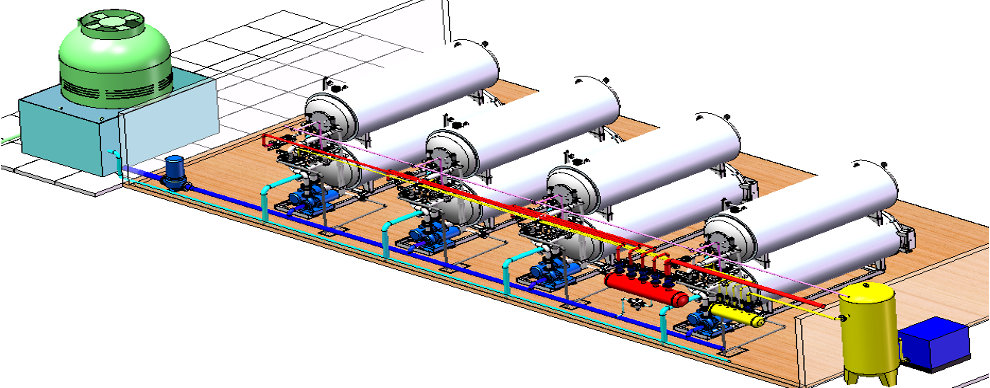
For 10 years Sterifood has been dedicated to autoclaves manufacturing and process optimization to serve food and pharmaceutical industries.
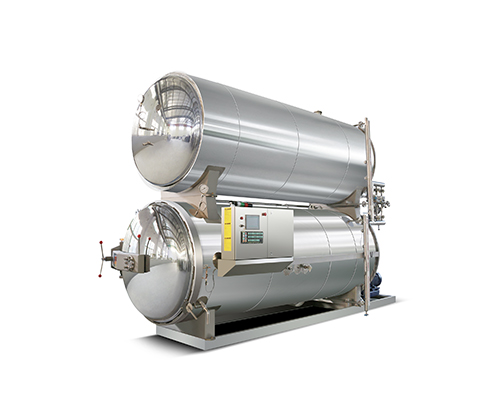
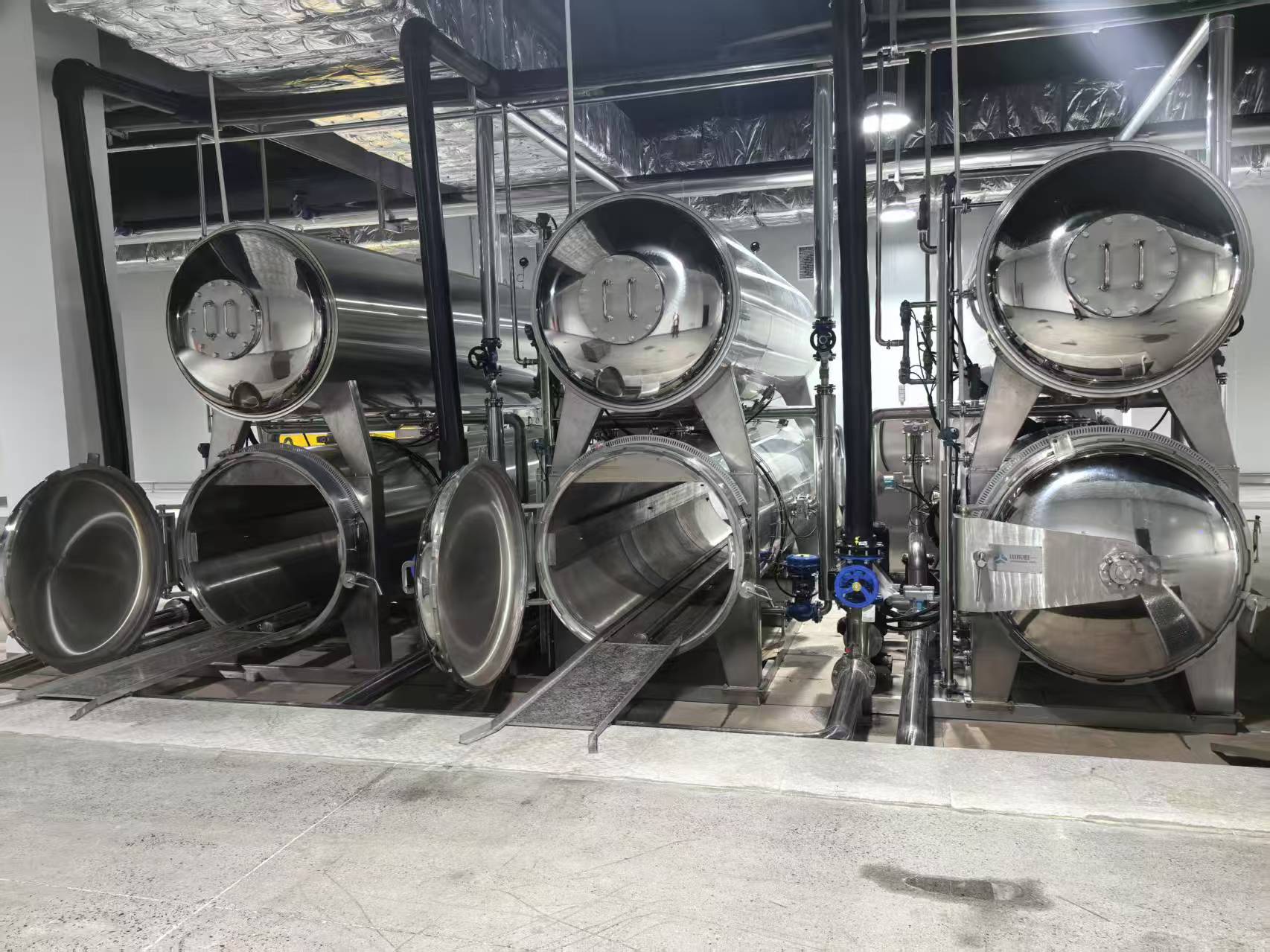
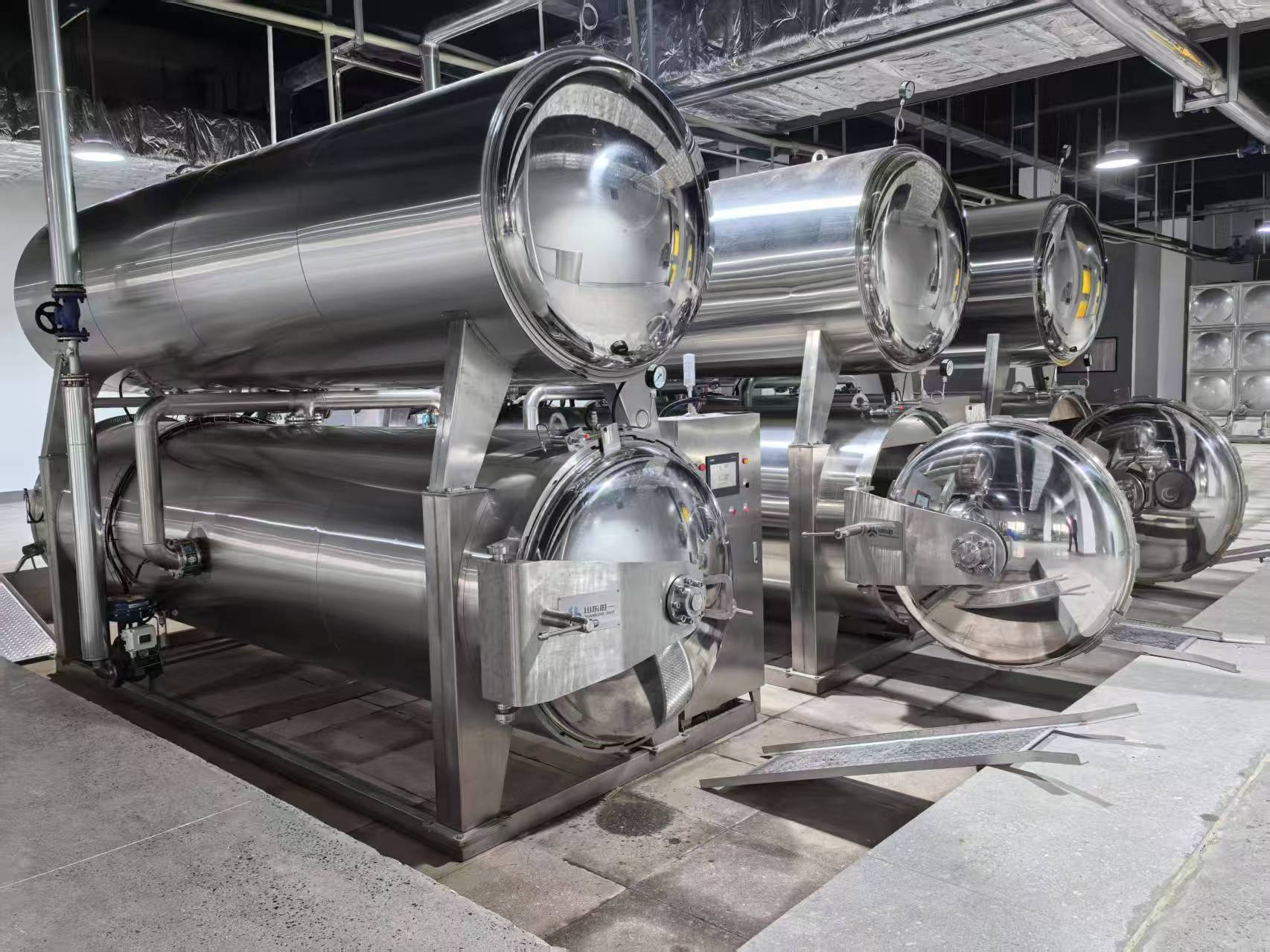
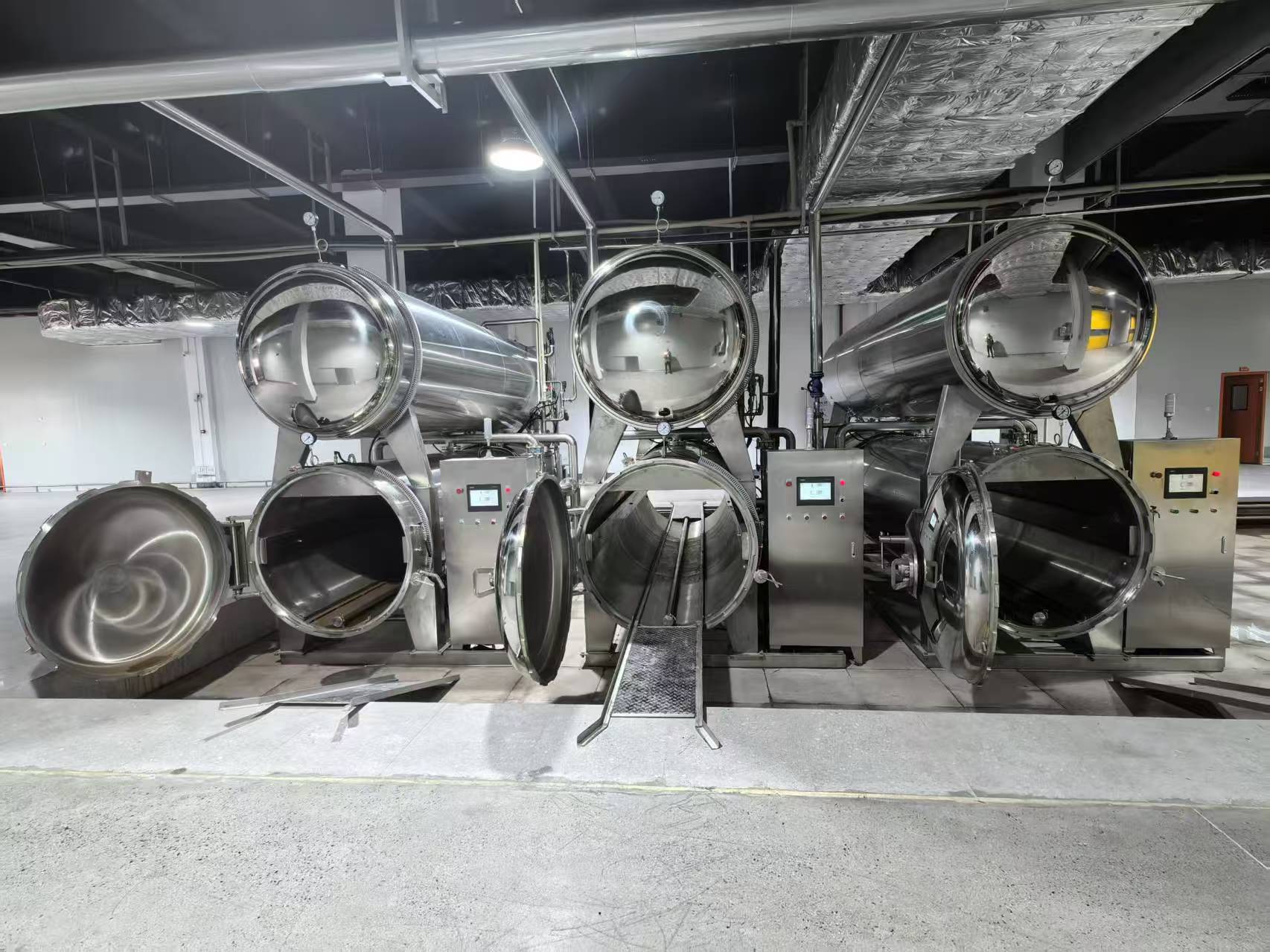
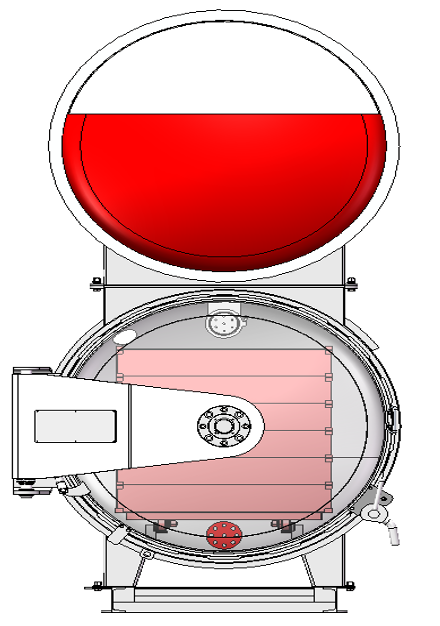
Full water immersion counter pressure retort
· Energy contained in the storage vessel allows for an extremely short temperature come-up-time.
· Water envelops the containers - even temperature penetration into the product from all sides.
· Optimised water circulation system guarantees homogenous temperature distribution.
· Buoyancy in full water immersion relieves sensible containers as semi-rigid trays, pouches etc.
· Counterpressure control with steam in the storage vessel avoids pressure peaks and minimises stress to packaging material.
· Containers are at no process phase in contact with air - oxidation of products is securely excluded.
· Even, gentle but nevertheless fast cooling avoids thermal shock and post-sterilisation cooking effect.
· High temperatures, transferred swiftly into the product, ensure that the required lethality effect (F-value) is obtained as fast as possible
1.Storage/prepare tank
The purpose of the Prepare Tank step is to heat (superheat) the water in the Storage Vessel – the hot water reservoir. The Temperature, pressure and level are all brought to recipe-defined set points to complete the step. It should be noted that the door must be detected as closed and locked, along with the door safety detected as engaged before the step can be exited to the first come-up(heating) step.
2. Retort processing heating
1)Also known as Process Vessel or Sterilization I, the purpose of this step is to drop the superheated water that is stored in the upper vessel (the Storage Vessel) onto the product in the lower vessel (the Process Vessel.) In making this drop, the superheated water flashes in the process vessel and creates a saturating condition, forcing much of the air to exit (normally out of the Pressure Relief valve). For production retorts, the lower connection valve is opened until the level reaches the Preset Vent Completed Mark, at which time, the lower connection valve and the Pressure Relief valve is closed and the upper connection valve is opened to continue filling the machine. In addition, with the upper connection valve open and the Pressure Relief closed, pressure is controlled using the pressure control capabilities in the Storage Vessel, for both the Storage and Process Vessel.
2). Also known as Sterilization II, during this step, the pump remains on, and the rotation continues (if a rotary process), and the temperature and pressure continue to be controlled to the set point. In order to successfully complete and exit this step, time and temperature conditions established in the recipe (this should be in accordance with the filed process) must be met simultaneously. At the end of the scheduled come-up time, the retort must be at, or above, scheduled cook temperature (unless there are multiple come-up steps) to prevent an Uncleared Deviation during the Cook step. If these conditions are not met, the phase time may be extended so that the process exit condition can be reached, without creating a deviation.
3) Also known as Sterilization III, the Cook Step involves sterilizing the product after it has reached the established Cook Temperature throughout the retort (the purpose of the Come Up step). In order to successfully complete and exit this phase, the conditions established in the recipe (this should be in accordance with the filed process) must be met for the length of the process. Throughout the scheduled cook time, the retort must be at, or above, scheduled cook temperature, at or above water level for the entire length of the cook – a predetermined level sufficient to cover the top of the basket, the flow must be within an acceptable range for the entire length of the cook, and at acceptable RPM speeds (if rotary process). If the temperature condition is not met, and an alternate process is available to the controller, a Deviation condition is created and the cook time may be extended by the alternate.
3.Cooling process (two way to recycle water to storage tank option )
Way No.1:This step begins the cooling process, while simultaneously filling the Storage Vessel. Cooling water enters the Process Vessel, while the upper connection valve (that connects the top vessel to the bottom vessel) is opened. The cooling water entering the process vessel forces the warmer water through the connection valve into the storage vessel. When the storage vessel is filled to the recapture level, the step ends. Note: Circulation (Flow) and RPM’s (if a rotary process) continue.
Way No.2:This step begins the cooling process, while the sterilization water is recycled back to storage tank by pump. After all water is returned to storage tank ,then the cooling water entering to the process retort to start cooling.
Previous: No more
Next: No more
Telephone: +8613564509569
Email: frank@sterifood.com
WhatsApp/wechat: +8613564509569